Showing posts with label Food History. Show all posts

Saturday, October 13, 2012

Knishing Cousins Share Potato Knish Recipe and History (Oh, and it's Blog Appetit's Seventh Anniversary!)

I can't believe today is Blog Appetit's seventh anniversary - thanks everyone for the help, support, advice and readership over the years.  Watch for a celebration post.  Meanwhile, please enjoy this special post (and potato knish recipe), my 695th. -- Faith

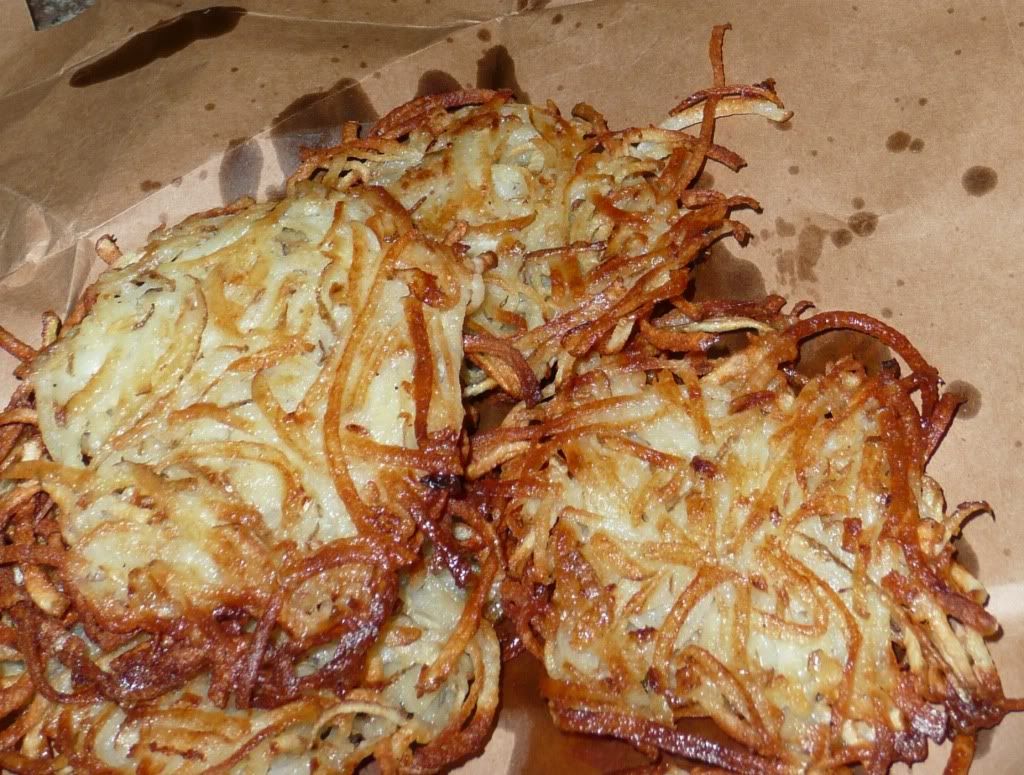
A real San Francisco treat - Mrs. Stahl's New York potato knishes
In a sunny San Francisco kitchen one recent afternoon, two cousins passed on a New York knish tradition.

Toby Engelberg and her cousin Sara Spatz were showing food writer and documentary filmmaker Laura Silver how to make their grandmother’s knishes. Engelberg’s grandmother was no amateur knish maker; she was Fannie Stahl, founder of Mrs. Stahl’s Knishes of Brighton Beach in Brooklyn, New York, one of the city’s legendary purveyors of the stuffed, baked Eastern European savory pastries.

Silver, a New York-based knish historian and expert, had been looking for years for Stahl family members and the recipe for the knishes she had grown up eating. To Silver the plump dough circle is more than just food. It is a “catalyst for talking about memories” and “a vehicle for nostalgia.” 

“It was amazing to find Toby. It went beyond my wildest dreams that I’d be making knishes with a descendant of Mrs. Stahl and in San Francisco,” said Silver, who had come West just to meet Engelberg and learn to make her knishes.

Silver had spent years tracing records and false leads for Mrs. Stahl’s Knishes only to find a clue on an on-line food forum posting by a Stahl relative. Through him, she found Engelberg. They had an “instant connection” and not only did Engelberg have the recipe, she was the family genealogist and was able to fill in the blanks on Silver’s research.
Laura Silver (left), Sara Spatz and Toby Engelberg with knishes
“The fillings are what I remember,” Engelberg said. She prefers the traditional fillings such as potato onion, cabbage or kasha (buckwheat) and is still tweaking her re-creation of her grandmother’s recipe. Working with Silver was “a great chance to get our story correct,” she said.

Engelberg, an architect who moved to San Francisco in 1988, once contemplated making knishes commercially, but she said the market for her hand-made savory pastries was not there. Now she makes the knishes for her annual holiday parties and for friends “who are really into it.” 

A camerawoman recorded Engelberg at work for Silver’s documentary on the Eastern European filled pastry. The dough was stretched out whisper-thin on the slate counter of her kitchen. Engelberg, often consulting with Spatz (who came from New York to participate), would spread a line of filling across the top, brush the dough with oil and turn the dough over until the pastry encased the stuffing. After a few more turns, the filled rope of dough was ready to be cut, shaped and baked into Mrs. Stahl’s famed knishes. With Silver helping out, the cousins made dozens of knishes for a party that night filled with appreciative friends who shared their own knish memories.

Mrs. Stahl began selling her knishes on the beaches and boardwalks of Brooklyn in the 1920s. By 1935 she had opened her shop in the Brighton Beach neighborhood. The cousins, daughters of the youngest and oldest of Stahl’s five children, reminisced about their grandmother’s shop including the machines that stretched and rolled the dough and the workers hand shaping the knishes at giant tables. The shop was sold in the mid-1960s a few years after their grandmother died. Subsequent owners kept the business going until 2005 when it closed for good, although a New Jersey pasta company still markets its frozen knishes under the Mrs. Stahl’s name to food service and other accounts.

In addition to researching knishes connections in New York and San Francisco, Silver has traveled to Minnesota, Poland and elsewhere on the trail of historic and modern knish makers.

“There’s a quote from Isaac Bashevis Singer about Yiddish that says the language is dying but it is never dead,” Silver said. “You can say the same thing about knishes.”

Her work in chronicling and celebrating the knish’s history while trying to introduce new eaters to the pastry has been supported by several organizations, including the Hadassah-Brandeis Institute. Her book, tentatively entitled the “Book of Knish,” is on track to be published late next year by Brandeis University Press. She hopes to have a pilot of her documentary ready to debut next year as well.

Silver is also working on an exhibit about knish history and other projects and invites folks to share their knish stories and local resources. Silver can be contacted at knish@me.com or through her website, www.knish.me .

Below is Engelberg's recreation of her grandmother's potato knish.  For a different style of potato knish, see this post and recipe on Blog Appetit.

Tuesday, September 27, 2011

Say it with Food -- Symbolic Foods and Seder Enrich Rosh Hashanah Dinner

Some of the symbolic foods of the Rosh Hashanah Seder
The Rosh Hashanah Seder, one of the oldest the holiday’s food traditions, is now one of its newest trends in celebrating the Jewish New Year.

Eating symbolic foods the first night of Rosh Hashanah dates back to Rabbi Abaye’s instructions in the Talmud to eat five foods that were typical of the season. These foods had names or qualities that represent wishes for health, prosperity and a “good” year. Some sources say what we would now call a Rosh Hashanah Seder, or “order of service” has existed for about 2,000 years.

Sephardic and Mizrachi Jews have a long history of serving and blessing not just the Talmud’s suggestions but a host of foods whose name or appearance supports the observance of Rosh Hashanah.

Jews outside these traditions have adopted the custom of a Rosh Hashanah Seder by adapting some of the long-standing practices and adding new ones ranging from blowing of the shofar to reflecting on goals for the coming year to celebrating the New Year as the world’s birthday.

But even Ashkenazi Jews who have never heard of the concept of a Seder at Rosh Hashanah have long served symbolic foods such as apples and honey and honey cake (for a sweet year), round loaves of challah (symbolic of the crown as well as the circular nature of time) and often a dish containing carrots. (Cut into slices, the carrots recall golden coins and their Yiddish name sounds like the word for multiply.)

Below is information on the symbolism of certain foods and how to create your own Rosh Hashanah Seder and links for more information.

Saturday, July 23, 2011

Almond Joy with Recipes for Almond Tart, Almond Party Mix and Almond-Stuffed Dates

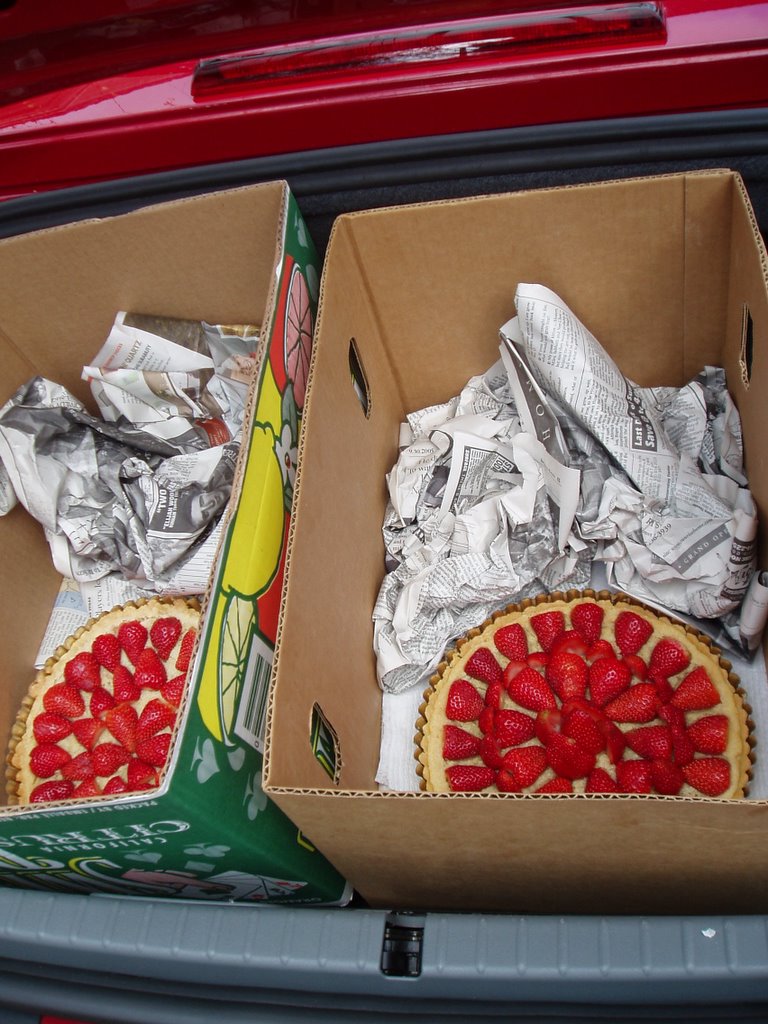
Almond and Berry Tarts to Go
 Almonds are probably one of the most universal foods used in celebrations. Many different cultures are nuts for this nut as a symbol of hope, renewal and happiness.

The almond’s connection to marriage is particularly strong. Some traditions are based on there being both bitter almonds (unavailable in the U.S.) and sweet, so they use this relative of the rose and peach as a reflection on the duality of marriage. Others view almonds as symbols of prosperity, fertility and economic security.

Almond customs at weddings, engagement parties and other ritual events surrounding marriage include tossing almonds and coins at newly married couples, serving sweetened rice or couscous garnished with almonds at nuptial events, and offering confections made from almonds. The most famous of these is probably candied Jordan almonds served or given at weddings. The name Jordan is a corruption of the name of the variety of almond (jardin) first used to make this sweet.

Below are some almond-based treats for whatever you are celebrating.  This column is adapted from one that first appeared in j. weekly.

Almond Tart with Strawberries
8 servings

This is my adaptation of a recipe I first made in a cooking class in Paris. Use your favorite tart crust in a 9” removable bottom pan or use a homemade or purchased pie crust in a 9” deep dish pie pan. If you need a crust recipe, check out the easy no-roll crust recipe I learned when I first made this tart.  If you can’t find almond meal (made with unblanched almonds) or almond flour (made with blanched almonds), grind raw almonds in a food processor until fine and powdery.

1 uncooked tart or pie shell
1/2 cup sugar
1/2 cup almond meal or almond flour
1/2 cup butter, room temperature
1 Tbs. flour
1 egg, beaten
1 tablespoon rum or brandy
1 lb. strawberries

Heat oven to 425 degrees. Prick tart or pie shell all over with fork. Place tart or pie pan on baking tray and bake for 10-15 minutes or until just golden. If using a frozen pie crust, follow package instructions. Remove from oven, place on rack and let cool completely.

Heat oven to 350 degrees. In a bowl, mix the sugar with the almond meal. Add the butter and thoroughly blend using fork, pastry blender or fingers until the mixture is evenly combined. Add the egg, flour and rum. Mix well. Place in prebaked crust on baking tray. Bake for 20-30 minutes. The filling should be set but still soft and have risen slightly and the crust should be lightly colored. Cool for 2 minutes on a rack. Wash, drain and remove stems on strawberries. Slice them in half if large. Arrange berries on top of baked tart, pressing slightly into the filling. Let cool. If using a removable bottom tart pan, remove outer ring before serving.

Anya’s Luxe Party Mix with Almonds
Makes about 2 cups of mix

Anya is a friend of mine who is a creative pastry maker and chocolate confectioner. This party mix calls for the best ingredients you can find. To see how I've made this mix with other combinations of nuts and dried fruit, click here.

4 oz. dark or bittersweet chocolate chopped into 1/4” to 1/2" inch chunks.
3/4 cup dried pitted cherries or dried cranberries
1 cup (shelled) whole roasted almonds
1/4 tsp. canola or extra-virgin olive oil
1/4 tsp. or to taste finely ground sea salt.

Combine the chocolate, dried fruit and almonds, drizzle the oil over the mix and toss well. Sprinkle in salt and toss again. Serve in a bowl or small individual dishes.

Almond Stuffed Dates
Makes 16

Many Jewish cultures serve confections such as this at weddings and other lifecycle events. Almond paste is available in the baking section of many supermarkets. Do not substitute marzipan.

16 large Medjool dates (about 12 oz.)
1/3 cup almond paste
8 whole raw almonds (shelled)
Sugar, optional

Cut a slit into the long side of the date, making a deep opening that goes almost from one end of the date to the other. Remove pit. For each date take 1 tsp. of almond paste and roll into an oval. Press inside date opening. Gently squeeze sides. Slice each almond in half. Press half almond on the top of almond paste filling for each date. Refrigerate until 20 minutes before serving. If desired, roll stuffed date in sugar to lightly coat just before serving.

Monday, November 29, 2010

Oil Vey! Chanukah Foods From Around the World -- This Thursday in Berkeley


Go Beyond Latkes to Learn About Other Chanukah Foods
 Come to an adult Chanukah (or Hanukkah if you prefer) party, 7 p.m. this Thursday, December 2nd at the Jewish Community Center in Berkeley.  After candle lighting join one of four hour-long talks about Chanukah, including mine about Chanukah foods from around the world.  Everyone gets back together at 8:20 p.m. for chocolate and port.

I've been doing my homework and will have a presentation as jam packed as a sufganiyah (Israeli Chanukah jelly doughnut) full of Chanukah foods past and present as well as a handout of some recipes to for some take home exploration.  I'll be covering Chanukah foods from apples to zvingous and a whole lot of tasty treats in between.

In addition to Oil Vey! Chanukah Foods From Around the World, the other talks are:

Christmas in a Jewish Family (presented by Dawn Kepler of the interfaith family group Building Jewish Bridges)


Oil: Miracle or Finite Resource: An Environmental Perspective on Chanukah (Presented by Ron Feldman of the JCC)

Light and Darkness: A Mystical Understanding of Chanukah (presented by Rabbi Bridget Wynne, executive director of Jewish Gateways)

Admission is free and open to all, but you must be 21 or older.

The Jewish Community Center of the East Bay is located at 1414 Walnut Street in Berkeley.

The event is sponsored by the JCC of the East Bay, Building Jewish Bridges, Oakland Ruach Hadassah and Berkeley Hadassah.

Go to the JCC website for more information.

Thursday, November 18, 2010

Potato Knish Recipe and the Best of Jewish Cookbooks (Just in Time for Chanukah Gifting)

For me every recipe tells a story that reflects back on its culture, time and place. And when that recipe is Jewish, there is also centuries if not millennia of tradition and religious observance to understand as well. The best of the new crop of Jewish-themed cookbooks help tell the stories of Jews and the food they ate from ancient Israel to New York's Lower East Side immigrants to  the present day North African Jews in France. Plus any one of these books would make a swell Chanukah (Hanukkah) present.

“It gives you a sense of this is what our ancestors ate,” said Chaim Mahgal-Friedman, owner of Afikomen, Berkeley, CA, of the new edition of Kitty Morse’s “A Biblical Feast: Ancient Mediterranean Flavors for Today’s Table.” All recipes use ingredients thought to be used during the time of the bible in the Jordan River Valley. Mahgal-Friedman also likes how the book has clear instructions on how to go back to basics and make your own goat cheese, unleavened breads and sourdough starter. Morse’s self-published book is “beautifully illustrated” and easy to use, he said.

Afikomen is known for its large selection of Jewish cookbooks. Mahgal-Friedman also recommended “The Book of New Israeli Food” (Schocken) by famed Israeli food writer Janna Gur. Gur’s book is a few years old but gained local attention this past year with a display of Eilon Paz’s stunning food photographs from the book at the Peninsula Jewish Community Center in Foster City and Gur’s appearances around the Bay area.

Another recent book Mahgal-Friedman is excited about is “The Complete Asian Kosher Cookbook” (Targum Press) by the mother/daughter team of Shifrah Devorah Witt and Zipporah Malka Heller. The duo adapts Chinese, Japanese, Filipino, Thai and other Asian favorites so they can be made kosher with easy-to-find ingredients but still taste authentic.

Two new books have the attention of Celia Sack of Omnivore Books on Food in San Francisco, CA. She is looking forward to stocking Paula Shoyer’s “The Kosher Baker” (Brandeis), a collection of 160 dairy-free dessert recipes that include such delights as Babbka Cupcakes with Crumb Topping, Cinnamon, Vanilla, & Raspberry Macaroons, and Chocolate Peanut Butter Mousse Cakes.

“I think it’s the best thing coming out right now. It's a beautiful book, and I don't think the topic has ever been written about this extensively,” Sack said.

Sack also recommends “97 Orchard: An Edible History of Five Immigrant Families in One New York Tenement.” The author, Jane Ziegelman, is the head of the culinary department at the Tenement Museum in New York City. The museum has restored an 1863 tenement-style apartment house and shares the stories of some of the almost 7,000 people who lived there in the 19th and 20th centuries.

“97 Orchard,” published by Harper Collins this summer, was on several booksellers’ lists. The book details the food ways of five different immigrant families who lived in the tenement on New York’s Lower East Side. It includes 40 recipes from the families’ German, Italian, Irish and Reform and Orthodox Jewish traditions.

Nurit Sabadosh, owner of Alef Bet Judaica in Los Gatos, CA, is also featuring the “New Book of Israeli Food” and is looking forward to stocking the latest book in the “Kosher by Design series. The books, by Susie Fishbein, are bestsellers for Alef Bet and Sabadosh expects the newest one, “Kosher by Design: Teens and 20-Somethings” (Shaar Press), to be popular as well. The book features alternatives to fast food that can be made with no special equipment and little or no cooking skills.

At Dayneu, a Judaica store in San Francisco, CA, co-owners Eva-Lynne Leibman and Hiroko Nogami-Rosen also carry the Kosher by Design series. They say they are looking forward to “Quiches, Kugels and Couscous: My Search for Jewish Cooking in France” (Knopf) by Joan Nathan, author of long-time favorite “Jewish Cooking in America” (Knopf). The book traces culinary influences as Jewish food in France evolved and then influenced general cooking in France.

Another stalwart of Jewish cuisine also has a new book on Jewish food out. The “Encyclopedia of Jewish Food” (Wiley) by Gil Marks, rabbi, chef and historian and author of “Olive Trees and Honey: A Treasury of Vegetarian Recipes from Jewish Communities Around the World” (Wiley) and other books, is part comprehensive food history book, part cookbook, part cultural anthropology text and more. It explains not only what foods such as ajin taimani (Yemenite bread), kichel (Ashkenazi egg cookie) and yakhna (a Persian meat stew) are but why they came about, where they migrated from and how they changed over time, often with recipes. The book also contains listings for Jewish holidays, food customs and a Jewish food history timeline. Marks’ background as a chef, rabbi and historian shines through in this well-written book.

For anyone who wants to learn more about Jewish tradition and life it is a valuable resource. For those of us who enjoy exploring our own and others Jewish food heritages it is an invaluable one.

Take for example the potato knish. Marks’ listing for knish opens with a quote from writer Sholem Aleichem, describes its origins as a medieval Polish fried patty and traces its evolution into “a small, round, fried, filled pastry” and then to a baked form similar to what we know today. The knish’s importance increased as the availability of home ovens did and the importation and cultivation of the New World potato into the Old World created the potato filling I so fondly remember. The entry goes on to detail the changes to the knish and prominent events in its history after it crossed back to the New World and concludes with the role the pastry now plays in Israel.

Here is my adaptation of Marks’ recipe for “Ashkenazic Filled Pastries,” or knishes, from the "Encylopedia of Jewish Food." 

Potato Knishes
Makes about 8 large or 36 small knishes

Note: Marks does not specify what kind of potato to use. I used large creamers, similar to new potatoes. While I loved the rich onion taste of this traditional recipe, I also liked my spicier Southwestern variation below with roasted green chilies and cheese.

Pastry:
¾ pound potatoes
2 large eggs, lightly beaten
2 tablespoons vegetable shortening or margarine
1 teaspoon salt
About 3 cups all-purpose flour

Filling:
1 pound of potatoes
2 Tbs. oil
2 cups chopped onion
1 tsp. salt
¼ tsp. ground black pepper
1 large egg, lightly beaten

Egg wash (1 large egg beaten with 1 Tbs. water)

Make the pastry: Boil potatoes in lightly salted water until tender. Cool. Put through a food mill or slip off skins and mash. Use 2 cups of the mashed potato for the dough. Reserve extra for another use.

In a large bowl, combine the mashed potatoes, eggs, shortening and salt. Slowly add in flour and stir until soft dough forms and the no more flour is absorbed. Mix the dough with your hands if needed. Knead the dough for a minute or two on a lightly floured surface. Cut into fourths, shape each into a round and wrap with plastic wrap. Refrigerate for at least 2 hours or overnight.

Make the filling. Prepare the potatoes as described above. Use 2 ½ cups for the filling.

Heat the oil in a large fry pan and sauté the chopped onions over medium heat until golden brown. Stir into the potatoes. Add salt and pepper. Cool. Taste and correct seasonings. Stir in the egg.

To assemble: Preheat oven to 375 degrees. Grease a large baking tray or line with parchment paper. On a lightly floured surface, roll out the dough to 1/8” thick. For large knishes, cut 5” by 4” rectangles. For small ones, cut into 3” squares. Put ¼ cup of filling in each larger knish and about 1 Tbs. filling into the smaller ones. Draw edges together and pinch to seal. Put seam side down on baking tray. Brush with egg wash. Bake until lightly browned, about 20-25 minutes. Serve warm or at room temperature.

Southwestern Variation: Use 2 cups of mashed potato for the filling. Add 2 cups of shredded cheese and ¼ to ½ cup of roasted, peeled and chopped green chilies to the filling mixture.
------
This post was adapted from a new cookbook round up and a piece on potato knishes I wrote that appeared in the j. weekly.

Friday, September 24, 2010

A Taste of Jewish Shanghai Past -- Sweet and Sour Memories (and Recipe)


The Bund, once center of Shanghai Jewish life, today
There is something about China and the Jews.

Maybe it has to something do with a reverence for education, a shared sense of being an outsider, or just the appreciation many U.S. Jews have of growing up eating moo moo gai pan, but the stories of long assimilated Keifeng Jews and the more recent Jewish communities in Harbin and Shanghai attract us as much as the promise of egg fu young or even kung pao chicken.

The stories of lives led and a culture lost have an appeal that affects Jews beyond those whose heritage has been touched by these places, which includes communities of Russian Jews who fled pograms and poverty and later the Russian revolution through Siberia and the Trans-Siberian railroad into Harbin, Iraqi and Indian-Iraqi Jews leading what has often been depicted as idealized colonialized life in pre-World War II Shanghai or the grimmer realities of hunger, internment and uncertainity faced by Holocaust refugees in a Shanghai ghetto.

Recently at the Jewish Community Center of the East Bay, in Berkeley, CA, Inna Mink and Dianne Jacob got to explore their families' Chinese heritage and food memories and we got a taste literally and figuratively of a lost world, with local restaurants supplying some typical Shanghaiese foods for tasting. The event was co-sponsored by the Asian Culinary Forum.

The evening, tied to the closing of the Shanghai exhibit at San Francisco's Asian Art Museum, was supposed to be about food, but as usual it is hard to divorce the food from its place in memory, family, culture, society, economics and identity.

Mink's grandparents left the pogroms of Russia for Harbin, what was then essentially a Manchurian Chinese shtel without plumbing or much of anything else. It's only recommendation was that it was not Russia and they felt safe. When Mink was two, her parents thought there would be more economic opportunity in Shanghai and moved 1,000 miles to the south.  The lived in the French Concession, an upper class European section of a city divided by race, class and economics thanks to the Opium Wars and its position on the edge of China on the Yangtze River.

Mink is a grandmotherly woman who came to the U.S. after WWII, but her face softens, her smile broadens and a playful young woman peeks out from under her auburn bangs when she talks about growing up in Shanghai in general and eating there in particular.  "The food was spectacular in Shanghai," she said, almost with a sigh.

She and her mother did not cook nor did any in their set. Servants were plentiful. Food in the home was in the Russian style with beef stroganoff and chicken cutlets called kotleta po-kievksy oozing butter. Jewish style food and kosher considerations (such as mixing meat and milk products) were only seen on the table during the High Holidays and Passover.

Mink and her family mingled with her father's Chinese factory managers and customers, sometimes eating in their homes. Once a month they would visit their favorite Chinese restaurant Sun Ya, on what Mink called Bubbling Well Road (or Nanking) ; a restaurant whose food was so defining for her she has saved a menu from it. (The Cantonese-style restaurant is still in business and is now known as Xinya.) 

The family was Jewish, ate Russian food and sent Mink to a French school, but even now it is the Chinese part of her life that she feels has shaped her. The food is still compelling and the pull of Chinatowns and Asian restaurants is strong. Food is the only memory from that time she can still taste, but the time and place have marked her and made China part of her heritage.

Mink (left) and Jacobs
 Jacob's story differs in many aspects from Mink's. Her family was from a Baghdadi Jewish background.  These were  Mitzrachi, or Eastern Jews, with roots in Iraq and in India (where many Iraqi Jews settled before they came to Shanghai.) The Iraqi-Indian Iraqi community began settling in Shanghai the later half of the 1800s. By World War II it was made up of about 500 families who developed diverse Jewish organizations as well as built up the famous waterfront Bund and settled in the International concessions. Trade and business had brought them to Shanghai.  Orthodox and observant, for them events based in the synagogue and the home were of primary importance, but many went out for drinks, shows and other nightlife. As with Mink, servants ruled the kitchen and most of the Jewish women did not cook. The household cooks made British, Chinese foods, and dishes reflecting the Jews' Iraqi and Indian roots with adaptations for local food ways such as fresh bamboo shoots in the stew and rice flour dumplings instead of semolina.

"Usually it was an American breakfast, a British luncheon, an Iraqi-style tea with pastries and fruit and supper was Iraqi or Indian Jewish food," she said.

Jacob was born in Canada after her parents had immigrated in 1949, but she grew up in a home that identified strongly as Chinese. Her parents spoke to Jacob and her sister in the Shanghai dialect (or in Arabic), ate with chopsticks and tried to adapt New World ingredients and Chinatown pantry items into the remembered foods of their past and a connection to what had once been their home. Jacobs recalls her mother's version of spaghetti, a dish her mom had never eaten before, made with copious amounts of onions and black pepper and served with grilled chicken livers. Jacobs was in college before she had pasta with meatballs, tomato sauce and basil. She described the dish to her astonished mother who thought the combination totally unappetizing.

And once a month the family would eat out at a local Chinese restaurant, where, according to Jacob, Jewish "amnesia" would set in, and the Jewish dietary laws would be forgotten for a taste of the past and a connection with a life and identity they had left behind.

Growing up focused on the food of a country half a world away left an impact on Jacob. 

"I'd say I feel very Asian identified. I'm very comfortable with anything Chinese, particularly food."

The families of Mink and Jacob had very different experiences after the Japanese occupied the city in 1937.  Jacob's father's family, who had Iraqi citizenship, was considered stateless and was not allowed to work. One uncle made peanut butter and sold it on the street to survive.  Her mother's family held British papers and was interned for five years across the river in an encampment in the then rural Pudong area.  There was never enough food and what there was often spoiled and full of bugs.

As a Russian, Mink's wartime experiences were much less harsh.  There were some travel restrictions and shortages of such things as oranges, butter, eggs and gasoline, but they "didn't have to give up much," she said.

It was during World War II that the third major group of Jews arrived in Shanghai, refugees from the Holocaust.  These were Eastern European Jews many of whom were aided in their flight by visas issued by Japanese and Chinese consular authorities in Poland and Austria.  The Japanese eventually moved many of the 20,000 refugees into a  three-quarters of a square-mile ghetto in the Honkou district (sometimes spelled Honkow) without first moving out the area's 200,000 Shanghai residents in what already was an overcrowded and run down area.  Restrictions on the refugees increased as the war progressed, but the Japanese governor never acceded to the Nazi demands to hand over the Jews.

Neither Jacob or Mink had Honkou experiences to share, but several audience members had family members who were restricted to the ghetto and they spoke about the hardships, lack of food and rationing that their loved ones endured.  One woman told of how her Austrian grandmother made Viennese pastries and sold them in coffee houses to help provide for her family.

There were no recipes given out that night and both speakers said they knew of no cookbook that could capture the special food that their families had eaten in Shanghai. (One audience member commented "recipes were passed down from one generation to another like the Torah.") Most if not all the Jews of that period left China once the Communists came to power. The Jews in China today are mostly Israeli and other consulate and embassy personnel, Chabad emissaries, expatriate executives and other foreign workers. 
Ohel Moshe is now a museum

China itself seems to appreciate the richness and diversity Jews brought to Shanghai and has restored some buildings important to Jewish heritage including one of the Eastern European Jewish communities' synagogues and put in a Jewish museum. The exhibit is mostly photo and text panels and focuses on the Holocaust refugee experience, though, there is not much tangible evidence of the community itself except for on the second floor where an old sewing machine and other goods left behind by Jewish emigres are displayed.

There is almost no Judaica in the temple building, but there was  a mezzuah  (prayer scroll in a small container) hung on the door frame. When I was there, a young Chinese security guard came up to me, pointed to it with pride and in halting English told me it was something the Jews used to touch when they came into the building. I didn't explain to him that I knew all about these door hangings, I just thanked him. Then I reached up, touched it and kissed my fingers.

I remembered that moment the other night as Mink and Jacob were sharing their memories. I remember feeling connected to those Jews so long ago in such an exotic place by the universal Jewish act of touching a mezzuah. As Mink and Jacob talked that memory came back to me and I though maybe for me as well as others the appeal of Jews in China was that even in what to us is an exotic setting we still had that connection of ritual and meaning that we could share, even across time. And for Mink, Jacob and others with Harbin and Shanghai in their past, the food they ate was as an important link to them as any ritual, photograph or memory. It was a way to define their identity. Their lives in China were multicultural and multilingual. (Mink's family spoke Russian, Chinese, English and French. Jacob's family spoke Arabic, English and Chinese.) Perhaps they only became aware of themselves as being an Asian Jew after their families had left China, but it is now a haunting part of who they are.

-----------------

Here are some typical Shanghai recipes for drunken chicken, vegetarian goose and sweet and sour lotus root from the Asian Culinary Forum site. the recipes are by Chef Nei Chia Ji of Jai Yun and were prepared for an event at the Asian Art Museum in conjunction with the culinary forum as part of the programming centered around the museum's Shanghai exhibit.

The  1935 menu  from Mink's favorite restaurant, Sun Ya, is almost more like an informational brochure about Cantonese food than a menu.  Sweet and sour dishes seemed to be fairly popular, including Mandarin fish, called the "famous fish of Shanghai." Since I learned a version of sweet and sour sauce in my Shanghai cooking class and later adapted the recipe for fish, I include that recipe here.

Sweet and sour in Shanghai class
 Sweet and Sour Fish
Serves 4 or 6 as part of a multi-course Chinese-style meal

The ketchup in the recipe is totally authentic, much to my surprise. I haven’t done the research so I don’t know if sweet and sour sauce began life in this country (perhaps as an adaption of a traditional dish or a unique one based on Western food availability) and migrated there or a traditional one that was adapted as Western ingredients made their way to China. 
Note: I used a combination of regular white distilled vinegar and Chinese black rice vinegar (I used one third black rice vinegar), which gave the dish a nice taste and toned down the bright red sweet and sour color (as does the soy sauce). You could also try apple cider vinegar instead of the Chinese black rice vinegar or just using all white distilled vinegar. Avoid the Japanese rice vinegars; they are too mild to give the zing we associate with sweet and sour sauce.

Sauce
4 1/2 tablespoons sugar
4 tablespoons vinegar (see note above)
2 teaspoons soy sauce
4 tablespoons tomato ketchup
1 cup water
¼ teaspoon salt

Fish
1 ½ pounds thickish filets of rock cod, cod, halibut, pretty much any non-oily white fish
1 teaspoon salt or to taste
2 eggs, beaten
3 tablespoons of cornstarch
Canola or other vegetable oil for deep frying

Stir Fry
4 cloves garlic, thinly sliced (about a heaping tablespoon)
2 green onions, white and light green parts, thinly sliced (about 2 tablespoons)
2 medium bell peppers (I used one green and one red), cut into 1” or so pieces
1 tablespoon cornstarch dissolved in 1 tablespoon water
8 ounces of pineapple cut in 1” cubes, (fresh or drained canned)

Make the sauce first in either the wok or another pan.
Combine all the sauce ingredients in the pot. Heat over medium heat, stirring occasionally, until the sugar is dissolved and the mixture is well combined. Taste and correct the seasoning, adding more vinegar, ketchup and/or salt until you have the preferred balance of sweet vs. sour. Set aside off the heat. (If you have used the wok for the sauce, thoroughly clean and dry it before frying fish.)

Prepare fish. Rinse and pat fish dry. Sprinkle fish with salt. Cut into approximately 1 ½ inch cubes or chunks. In a large enough bowl to hold all the fish cubes, combine eggs and cornstarch until well mixed. Add the fish cubes and toss to coat thoroughly.

Heat oil for deep frying in the wok or another deep, large pan, such as a chicken fryer or sauté pan. Heat oil until is medium to very hot (about 375 degrees F). (To see if the oil is ready, drop a bit of batter if it immediately sizzles and begins to brown, the oil is ready.) Add a few fish cubes at a time, frying until golden brown and cooked through and removing to drain on a plate. Continue until all the fish cubes are fried. Set aside.

Properly dispose of the oil, leaving about 2 tablespoons in the wok or pan. Strain out any left over fried bits with a slotted spoon or skimmer. Heat oil until very hot. Add the garlic and stir fry, being careful not to burn it. Add the scallions and the pepper pieces and stir fry until the pepper pieces begin to soften. Add in reserved sauce and bring to a boil. Slowly drizzle in the cornstarch mixture, stirring until it is well combined and the sauce is thickened. It should still be liquid, but not runny or thick and should coat the back of the spoon. Stir in pineapple chunks and the fish. Mix to evenly distribute sauce. Serve with rice.

-----------------------------
About the photos: Shanghai and stir fry  photos taken by me in 2008.

Tuesday, August 10, 2010

Dog Days of Summer: Top Your Hot Dog with Homemade Relish, Chili or Tomato Onions


Red hots, hot dogs, frankfurters, wieners, tube steaks, or weenies, whatever you call America’s favorite sausage, they are a staple of summer. July was National Hot Dog Month and I thought I would celebrate (a bit belatedly) with a post about man (or woman) biting dog. And topping said dog with homemade pickle relish, New York-style warm tomato onions and or a delicious (vegetarian) chili certainly improves the dog days of summer.

The origins of the first actual hot dog in a bun as we know it are murky, but America’s claim goes back to 1870 in Coney Island, a beach resort in Brooklyn, N.Y, which by 1916 leads to the creation of Nathan’s Famous hot dog stand by Polish Jewish immigrants and its popularity with the throngs of visitors crowding the area’s beach and boardwalk.

New York City is still the top dog in frankfurter eating, according to National Hot Dog and Sausage Council. As made by an army of street vendors through out the city, the New York all-beef dog is boiled or steamed and served in a plain bun with a tomato-onion sauce and mustard. However, a Coney Island hot dog is one served in a bun topped with chili. Chicago-style tube steak connoisseurs avoid ketchup, use a poppy seed bun and serve their all-beef dog with a pickle slice, relish, a pickled pepper, onions, tomatoes, mustard and celery salt. Here in the West, we are more likely to enjoy an alternative style hot dog, perhaps made from tofu, turkey or chicken than the rest of the country.

I’ve adapted some of these favorite hot dog toppings. My Phoney Island Hot Dog Chili is vegetarian. New York Onions with Ketchup Sauce recreates the steamed onions with tomato sauce I loved as a child but with a more adult taste. Fresh Pickle Relish will perk up any hot dog but works well within the tradition of the Chicago dog. These recipes were featured in my jweekly column here, since they make the perfect topping for Kosher all beef or vegetarian dogs.

New York Onions with Ketchup Sauce
Makes 2 Cups

2 tsp. oil
2 medium onions, cut in half and thinly sliced
½ tsp. red pepper flakes
1 tsp. paprika
1/8 tsp. ground cloves
½ tsp. sugar
½ tsp. salt
¾ cup tomato ketchup
5 Tbs. tomato paste
1 cup water

Heat oil in large fry pan over medium high heat. Add onions, sauté until beginning to soften and light gold. Add pepper, paprika, cloves, sugar, salt, ketchup, tomato paste and water. Mix well. Bring to simmer, stirring frequently. Cover and lower heat and simmer, stirring occasionally, until onions are very soft and sauce has thickened, about one hour. Serve warm over hot dogs.

Fresh Pickle Relish
Makes 2 Cups

Using a green bell pepper helps keep the relish it’s traditional green color. Red adds a bit of color.

6 medium full sour dill or garlic dill pickles
½ medium onion
1 jalapeño, seeded, optional
1 green or red bell pepper, seeded
1 tsp. sugar
¼ tsp. salt
1 Tbs. apple cider vinegar

Finely chop or mince (do not puree) the pickles, onion, jalapeño (if using) and bell pepper and mix well. Add sugar, salt and vinegar. Mix. Cover and let stand for an hour. Taste and add more vinegar, salt and or sugar as needed.

Phoney Island Hot Dog Chili
Makes 12 cups

This recipe makes a flavorful and spicy “Greek” style lentil chili that works great on top of a vegetarian or regular hot dog (or as an entrée by itself). Try it with a sprinkling of raw onions and soy or regular cheese. This recipe makes a lot of chili. Try it for dinner on its own or as a spaghetti topping (substitute it for the beef chili in the Cincinnati Five-Way Chili recipe here, the seasonings are very similar) in addition to a hot dog topping. The chili improves if made ahead a day or two and can be frozen.

1 pound regular brown lentils, uncooked
2 Tbs. oil
2 medium onion, chopped
4 garlic cloves, minced
4 ½ cups vegetable broth
1 ounce unsweetened baking chocolate
4 Tbs. chili powder
1 Tbs. ground cinnamon
¼ tsp. ground cloves
1 tsp. ground allspice
½ tsp. ground caradmon
¼ tsp. ground cumin
¼ tsp. paprika
1 bay leay
6 oz. tomato paste
1-14.z oz. can of diced tomatoes with liquid
2 Tbs. red wine vinegar
½ tsp. salt or more

Cook lentils according to package directions. Drain. Heat oil over medium high heat in a deep pot. Saute onions until golden, add garlic and sauté for a minute. Add broth, chocolate, chili powder, cinnamon, cloves, allspice, cardamom, cumin, and paprika. Bring to a boil. Add cooked lentils, bay leaf, tomato paste, diced tomatoes with liquid and vinegar. Simmer covered, stirring occasionally for an hour. Taste and add salt as desired. Simmer uncovered for 30-45 minutes until all the flavors have melded and the chili has thickened. Remove bay leaf before serving.

------------------------
About the photo: All three toppings on one dog. Not necessarily recommended for the faint of stomach, but useful for purposes of illustration.

Wednesday, May 05, 2010

What is Jewish Food, or, That's Funny, It Doesn't Taste Jewish

When I was growing up, I knew with certainty what Jewish food was. It was brisket, stuffed cabbage, matzoh ball soup, and everything else my grandmother fed me. It was liver roughly chopped by hand in an aged wooden bowl, glistening with chicken fat and dotted with flecks of burnt onions.

It was food that needed special plates and silverware for meat and dairy and the wonder of the magic of pareve, foods that could be eaten with anything. Mostly it was food Grandma had grown up eating as prepared by her Russian-born mother.

But what was Jewish to me then was really just a snapshot of one kind of Jewish food – a New York interpretation of Russian shtetl cooking.

So what is Jewish food?

“The food of the Jewish people is also the history of the Jewish people. The dishes, flavorings, and traditions chronicle the resources of the lands they were exiled to and from,” says author Marlena Spieler in The Complete Guide to Traditional Jewish Cooking.

The Jewish Diaspora brought red pepper to Hungry and pumpkin to Venice. These and other ingredients and cooking techniques influenced the local cuisines where Jews lived just as Jews were influenced by the available foods and prevalent dishes. Challah’s distinctive braid, for example, may have been adapted from a local bread in Germany. Italians still savor a dish from Rome known as carciofi alla giudia (artichokes in the style of the Jews).

Spieler’s book features food traditions and recipes from Russia, Poland, Ukraine, Germany, Hungry, Romania, Bulgaria, France, Italy, Spain, Portugal, Greece, Morocco, Egypt, Ethiopia, Iran, Israel, the Middle East, India, Central Asia, China, the United States and Latin America.

The food I ate in my grandmother’s kitchen would have been recognized by Jews from Germany and Eastern Europe as distinctly Jewish, although the food might be not sweet enough for the Poles and not spicy enough for Romanians. Ashkenazi food traditions began when Jews settled in the Rhine Valley and spread as persecution drove them further ever further eastward. According to Spieler, it was a cold weather cuisine. Cabbage and cucumbers were fermented into sauerkraut and pickles. Fish and meats were smoked and salted. Meat was scarce and often used as a component of other dishes to make it go further. Beans and grains were plentiful. Once potatoes were introduced they were widely eaten.

Sephardic Jews had very different food influences. Those who lived toward northern Spain had food ways that reflected the legacy of the Roman Empire such as grapes, wheat and olive trees. Those in the southern end of the Iberian peninsula were influenced by the occupation of the Ottoman Turks, and incorporated spices such as cumin, cinnamon, nutmeg and black pepper in their cooking as well as rice, almonds, citrus, eggplants, spinach and artichokes, according to Joyce Goldstein in Sephardic Flavors: Jewish Cooking of the Mediterranean.

Other cuisines developed independently of these major groups, but the spread of the Sephardim after their expulsion from Spain in 1492 and Portugal in 1497 affected the Jewish food cultures they came in contact with by trade or settlement. Sephardic Jews changed their cooking, too, as they began to learn new regional specialties.

As varied as the many cuisines of the Jews are, though, very few dishes can be traced back to the foods eaten in Judea more than 2,000 years ago, according to Gil Marks, author of The World of Jewish Cooking. Among them are Sabbath stews (such as cholent and hamin) and charoset (Passover nut and fruit pastes), but even then the ingredients and cooking methods would be unrecognizable to our ancestors.

One unifying factor that has shaped Jewish food is the religion itself, with its dietary laws, home-based, food-centered celebrations and the tradition of according symbolic meaning to some dishes.

According to Marks, it is this aspect of Jewish food that creates similarities in our varied cuisines. He points out all Jewish communities use foods mentioned in the Torah as “symbolic ingredients in assorted festival dishes.” Since foods had to be prepared in advance, “vinegar was commonly added as a preservative and often sweeteners or raisins would be added” to balance the flavor, resulting in a tradition of sweet and sour dishes across the Jewish food experience.

Another example would be cooking dishes fried in oil, such as latkes (Eastern European potato pancakes) or sufganiyot (Israeli jelly doughnuts) as symbolic foods for Chanukah, celebrating the oil that lasted for eight nights.

Dietary laws resulted in Jews creating a cuisine that was different from their non-Jewish neighbors and helped preserve a special sense of community, but this differentness also lead to persecution.

During the Inquisition, officials used the testimony about the eating habits of newly converted Christians to make sure they had abandoned all Jewish practices, according A Drizzle of Honey: The Lives and Recipes of Spain’s Secret Jews by David M. Gitlitz and Linda Kay Davidson. Preparing Jewish dishes and avoiding pork were seen as proof of unrepentant ways. Penalty for being discovered could be death.

The last century has seen other disruptions in traditional Jewish food ways. Many localized food traditions were lost because of the Holocaust. Writer Mimi Sheraton went to Bialystok, Poland, and found that virtually no trace of the city’s famed bialy, a chewy bread roll with onions, had survived the Holocaust.

As opportunities for migration to Israel and elsewhere became available, long established Jewish communities in other countries began to dwindle. The survival of many cuisines began to depend on communities that were now scattered. But others have now discovered the many flavors of Jewish food. Israeli cuisine has been influenced by this influx of food ways. Cookbook writers have become amateur historians to track down historic dishes as they worked to preserve the legacies of Jewish cuisines. Translating these recipes had another impact, as the mostly Ashkenazi Jews of North America and Europe began to discover Sephardic and other Jewish cuisines and incorporated them into their Jewish food repertoire.

I like to think that as we share our Jewish food heritage we begin to understand the diversity of the Jewish world and people. Slathering Yemenite hot sauce on pita bread, making a Tunisian vegetable dish, or eating other Jewish recipes from around the world connects me with Judaism and our shared history as much as when I try to recreate Grandma’s chopped liver. It is food out of our tradition that has become my tradition. To me, that’s what Jewish food is.
-------------------------------------
A condensed version of this essay appeared in the Temple Beth Abraham (Oakland, CA) Omer.

About the photos: From top: chopped liver, stuffed cabbage, seder plate (charoset is to the left of the parsley), potato latkes. For more photos and writing about Jewish food on Blog Appetit, click here , including recipes ranging from noodle kugel to sweet and sour pomegranate fish to tzimmes tamales.

Tuesday, October 06, 2009

The Jewish Deli -- It Wasn't Just for the Food and That Ain't Just Chopped Liver (Although the Recipe Is)

The professor had come to talk about the history of the American Jewish delicatessen as a cultural gathering place for second and third generation Jews. The crowd had come to talk corned beef, pastrami and maybe a little smoked whitefish. It was an uneasy mix, kind of like pastrami with mayo.

Ted Merwin, who teaches religion and Judaic studies at Dickinson College in Pennsylvania, spoke about the research behind his upcoming book Homeland of the Jewish Soul: A History of the Jewish Deli last week at San Francisco's BJE Jewish Community Library. (Merwin is also the author of In Their Own Image: New York Jews in Jazz Age Popular Culture.)

Merwin served up the history of delis from their German antecedents through the modern survivors from gourmet shop to famed restaurants. He talked of the meaning behind the overstuffed sandwiches while the audience was clearly fondly remembering sandwiches past and wishing they could find a deli worthy of the word that could equal the delights of their New York, Chicago, Los Angeles, Florida, Toronto and even Argentinean youth.

According to Merwin, and echoed by the deli devotees who came to hear him, deli food "really nurtured Jewish people in America. Something about the deli meats was at the heart of the Jewish experience."

Merwin says that our remembrances of delis past has less to do about the food than they do about what the place and experience meant for us. He says we are nostalgic for delis because they are part of the American Jewish identity (you could practically hear the crowd say "amen"). He quoted a patron of the (recently resurrected -- on Third Avenue) Second Avenue Deli in New York as saying as walking in, taking a whiff of the pungent mix of dill pickles and smoked meat and saying " 'Ah, I smell Judaism.' "

Jewish delis have become "almost sacred" as a "substitute" for not just religious identity but "on par with the synagogue as a communal experience."

The foods we associate with the Jewish delis -- lavish, meat-filled sandwiches, mountains of chopped liver, giant bowls of boiled chickens glistening in broth and all the rest are uniquely American, not Eastern European. Our Jewish forefathers and mothers could simply not afford to eat like this in their old countries.

The first Jewish delis in America probably started about 1880s in the Lower East Side and were basically purveyors of German-Jewish brined and smoked foods. They were strictly take out. A census of the 10th ward of the Lower East Side with a population of 75,000 Jews revealed that the residents of the district could select from only 10 delicatessens, but had 131 kosher butcher shops to select from. Jews who could afford to eat out ate in cafes, saloons and, probably most often, at very inexpensive lunch counters in candy stores.

The delis gain importance, according to Merwin, in the next generation, about the same time they began to gain tables and chairs and eating in at a deli became part of the Jewish landscape. This was in the 1920s and 1930s, which also accounts for the Art Deco style frequently associated with delis. Delis also spread and thrived away from the inner cities were the local Jews first arrived to the outer boroughs and other areas where the next generation moved.

As delis became part of the Jewish-American scene, they became a favored "third place" to many Jews, the place outside of home and work where you could feed your hunger for casual community. It is Merwin's thesis that the assimilated sons and daughters (and grandsons and granddaughters) of immigrants felt more at home with these culturally Jewish institutions than they did in synagogue sanctuaries or social halls.

"The food is less important to them then the context of community," Merwin says while his listeners' stomachs began to growl after all this talk of deli food. One could sense that they disagreed. The food seemed to be just as important to them. Merwin admitted the food was important, but it was the association of the food with the experience that created the nostalgia and longing they felt. To hear the gossip, to be insulted by the waiter (who may have been a veteran Yiddish theater or vaudeville actor), to have a sense of mastery and sense of place gave Jewish deli customers a sense of acceptance and belonging.

Merwin makes a distinction between kosher delis (following the kasruth laws of food preparation including the separation of meat and milk) and those that were kosher-style (where you could have pastrami AND cheesecake). Kosher-style delis were for the most part the glitzy stars of the deli scene with sandwiches named after famous patrons and public figures (think Stage and Carnegie delis in New York). Truly kosher delis were found less frequently and played an important role in the life of the observant but did not function as frequently as this "third place" since religious observance and synagogue life retained its importance among many of their patrons.

The importance of delis began to decline in many communities by the 1950s and 1960s as the food was seen as "too ethnic" and as Jewish food (such as deli meats, kosher hot dogs and rye bread) began to be mass marketed through supermarkets.

As Merwin wrapped up his talk about the cultural context of delis and opened up the discussion for questions, the crowd could no longer hold back their longing for the deli meats and other treats he had discussed for the previous hour. Animated listeners demanded time to discuss their favorite delis, foods and what, to them, made the perfect Jewish deli. A disagreement broke out among several in the audience if smoked fish (whitefish and sturgeon) and lox (cured salmon) were proper deli foods. I'm glad we didn't have a show of hands of pastrami versus corned beef fans. It could have gotten ugly.

See the notes below for more resources about Jewish delis. Once there is a website for Merwin's book, I'll update this post with it.

All this talk of Jewish deli food made me hungry, too. I went out and bought some good bread, pastrami and the makings for chopped liver like my grandma used to make. Serve the chopped liver as an appetizer on Tam-Tams, pieces of matzoh or cocktail rye slices. Or use it to make my favorite deli sandwich, pastrami on rye with a thick shmear of chopped liver and a few ribbons of sharp deli-style mustard. Need a pickle to go with it? Try making your own. Directions are here.

Grandma's Chopped Chicken Liver
Serves 6-12 depending on diners'cholesterol levels and if there are witnesses

Grandma was kosher and therefore had to cook the livers under the broiler in order to obey the religious restrictions to remove the blood. (Other cuts of meat could be salted to accomplish the same thing.) Broiling the chicken livers gives the dish that authentic taste.

This recipe makes a lot, but the chopped liver will last a few days well covered in the fridge. Feel free to halve the recipe if you'd like. A note about chicken schmaltz. It is rendered chicken fat and is available in some supermarkets, butcher stores and Jewish markets. Look in the freezer section. You can also render your own or substitute vegetable oil or shortening.

2 pounds of chicken livers
4 tablespoons chicken schmaltz (see note above) or vegetable oil or shortening
2 onions, thinly sliced
1 clove garlic, minced
4 hardboiled eggs, peeled
2 or more tablespoons of kosher concord grape wine (such as Kedem or Manischewitz)
1/2 tsp. salt, or more to taste
1/2 tsp. ground black pepper, or more to taste

Preheat the broiler and line a large baking pan with aluminium foil. Place the chicken livers in a single layer and broil (do in batches if necessary), turning once until the livers are cooked through and are a rosy brown inside. Sprinkle the cooked livers with a bit of salt. Remove the livers from the pan and put into a large bowl. Set aside.

Heat schmaltz (or substitute) in a large fry pan over medium heat. Scatter the onion slices and saute until beginning to color. Add garlic. Reduce heat to medium-low and slowly cook, stirring occasionally, until the onions are caramelized. They should have a deep, rich bronze color, be very soft and have a slightly sweet taste. Set aside.

Place the eggs in the bowl with the livers. Use a potato masher or fork and break them into large chunks or pieces. Add in the onions and garlic and all the schmaltz they were cooked with as well as the remaining salt and the pepper and 2 tablespoons of the wine. Mix well. Chop in batches by hand using a wooden bowl and a half-moon shaped mezzaluna chopping knife or in a food processor. Be careful not to over chop, the mixture should have a rough, slightly crumbly texture, it should not be pureed. Return chopped liver mixture to bowl and combine the batches. Taste and add more salt and pepper as necessary (I probably use quite a bit more, I like it just a bit too salty so it compensates for the blander cracker or matzo.) If the mixture is too dry, you could add a bit more of the wine. Then, essen min kinder (Yiddish for dig in).

----------------------------------------------------
More background on the history and future of the Jewish deli can be found here on Serious Eats.
Author David Sax is trying to save delis one sandwich at a time. You can find out more about his efforts and book on Save the Deli.

For a list of commendable Jewish delis worth the calories in NY (and in the comments section elsewhere), click here.
----------------------------------------------------
About the photos: Top, freshly chopped chicken liver like Grandma used to make. The other photo is of Ted Merwin during his lecture at the Bureau of Jewish Education on 9/30/09 in San Francisco.


Update: More on delis from around the web: Bitten blog and Joan Nathan in the New York Times.

Update 6/11: See a discussion on the recent Deli Summit about the future of the food and the institution on Zester.

Chopped Liver, 2nd Avenue Deli on Foodista

Saturday, March 17, 2007

Eat My Words -- Diner Speak


For a non-virtual writing assignment I have been researching diners. I was charmed by the colorful code or language waitresses and cooks developed over the years. See if you can answer these Diner Speak Questions correctly. Answers are in comments.

1. Which of these terms does not refer to a hot dog?

A. Ground Hog
B. Coney Island Chicken
C. Dog and Maggot
D. Bloodhounds in the Hay

2. A soup jockey is a ________________.

A. Patron that orders soup
B. Cook who prepares soup
C. Waitress who brings soup

3. Which of these terms does not refer to a hamburger?

A. Cowboy
B. Hockey puck
C. Chewed with Fine Breath
D. Burn one

4. What exactly are these desserts?

A. Nervous pudding
B. Eve with a lid
C. Bucket of cold mud
D. Fish eyes

5. What are these drinks?

A. Windmill Cocktail
B. Adams Ale
C. City Juice
D. Dog Soup

For more diner slang, you can click here (which is where these terms came from).
---------------------
Photo credit: Hangar Hotel